
The Battery 2030+ initiative brought together European researchers, industry stakeholders and projects around a shared ambition: laying the scientific and technological foundations for sustainable, safe, high-performing and affordable batteries. Although the initiative has now come to an end, its work leaves an important legacy for the European battery research community, including the Battery 2030+ R&I Roadmap. ReUse has been glad to be part of the Battery 2030+ community, to participate in its activities, and to contribute its perspectives to the development of the roadmap.
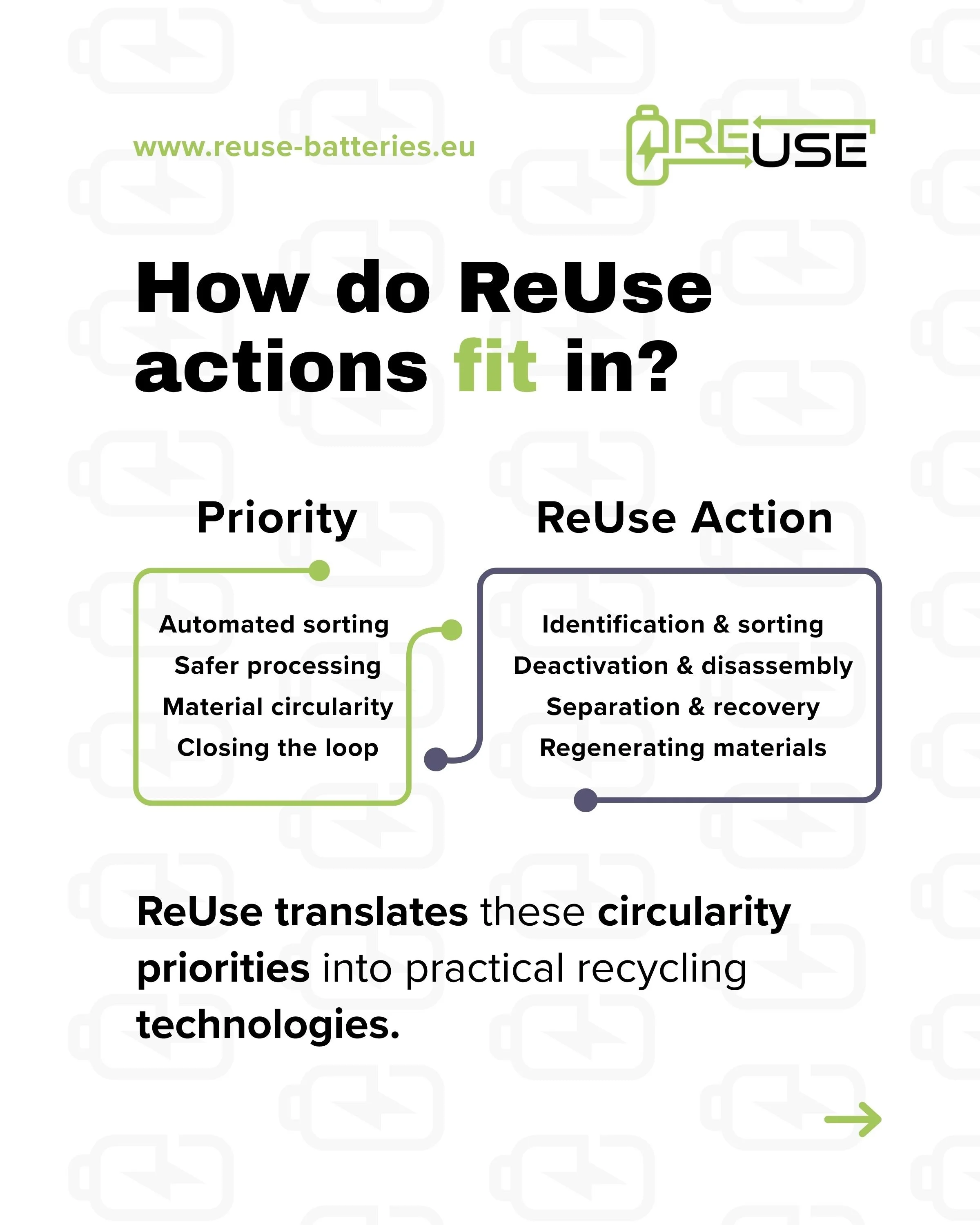
The Battery 2030+ Roadmap looks across the battery value chain and identifies research priorities ranging from accelerated materials discovery and battery interfaces to smart functionalities, manufacturability, raw materials and recycling. Its chemistry-neutral approach reflects the need for research solutions that can respond to an increasingly diverse battery landscape. For ReUse, the roadmap's priorities concerning circularity and recycling are particularly relevant.
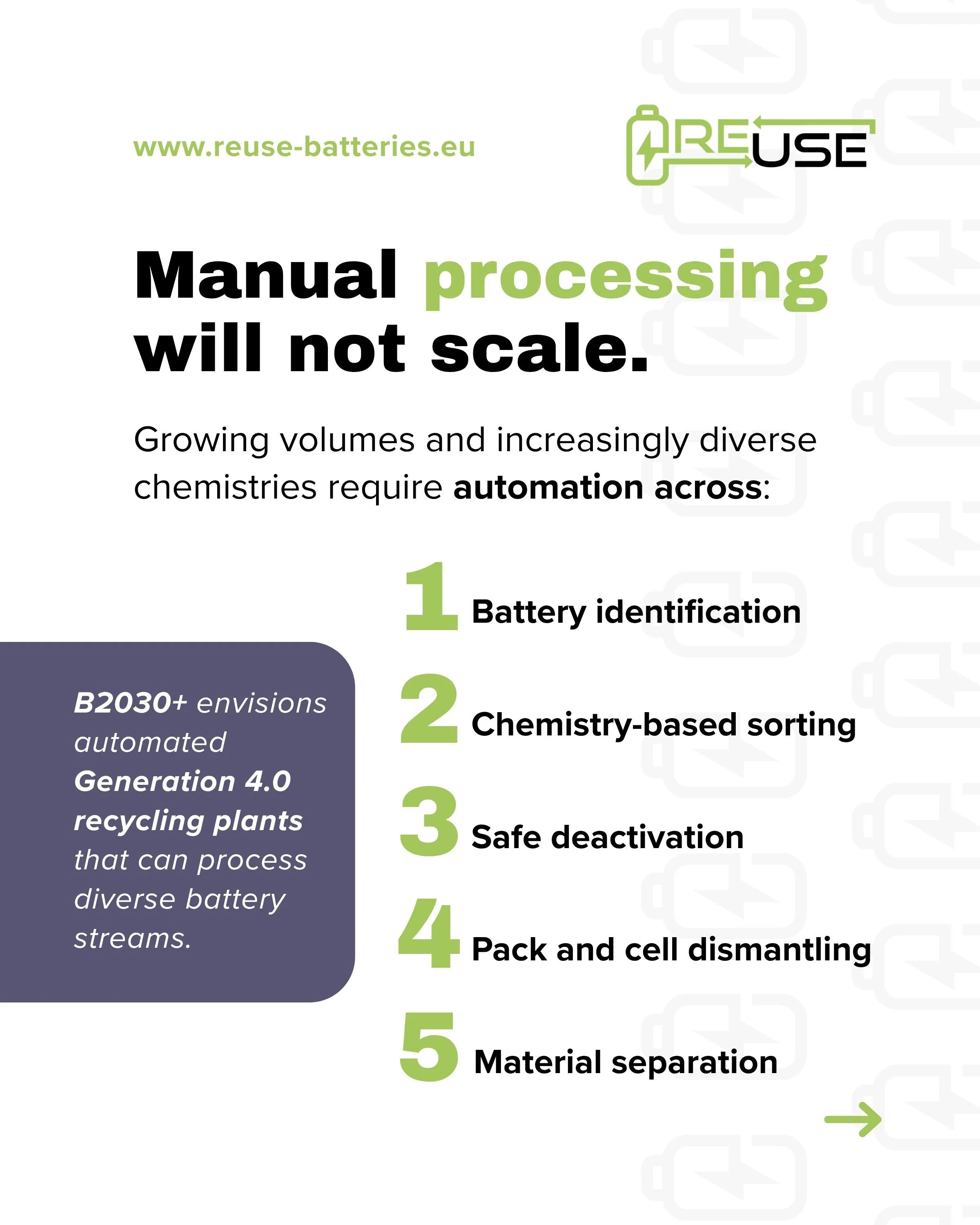
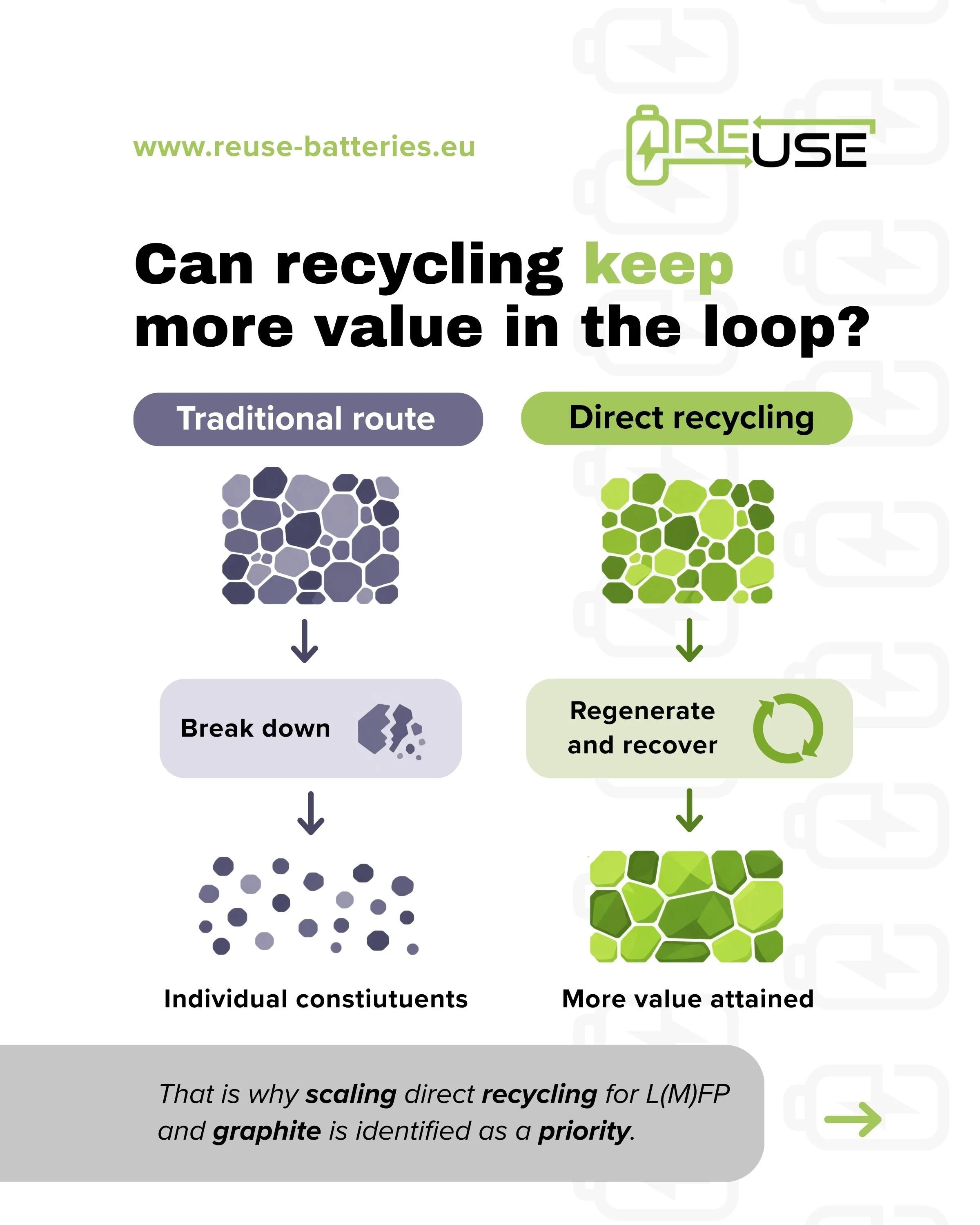
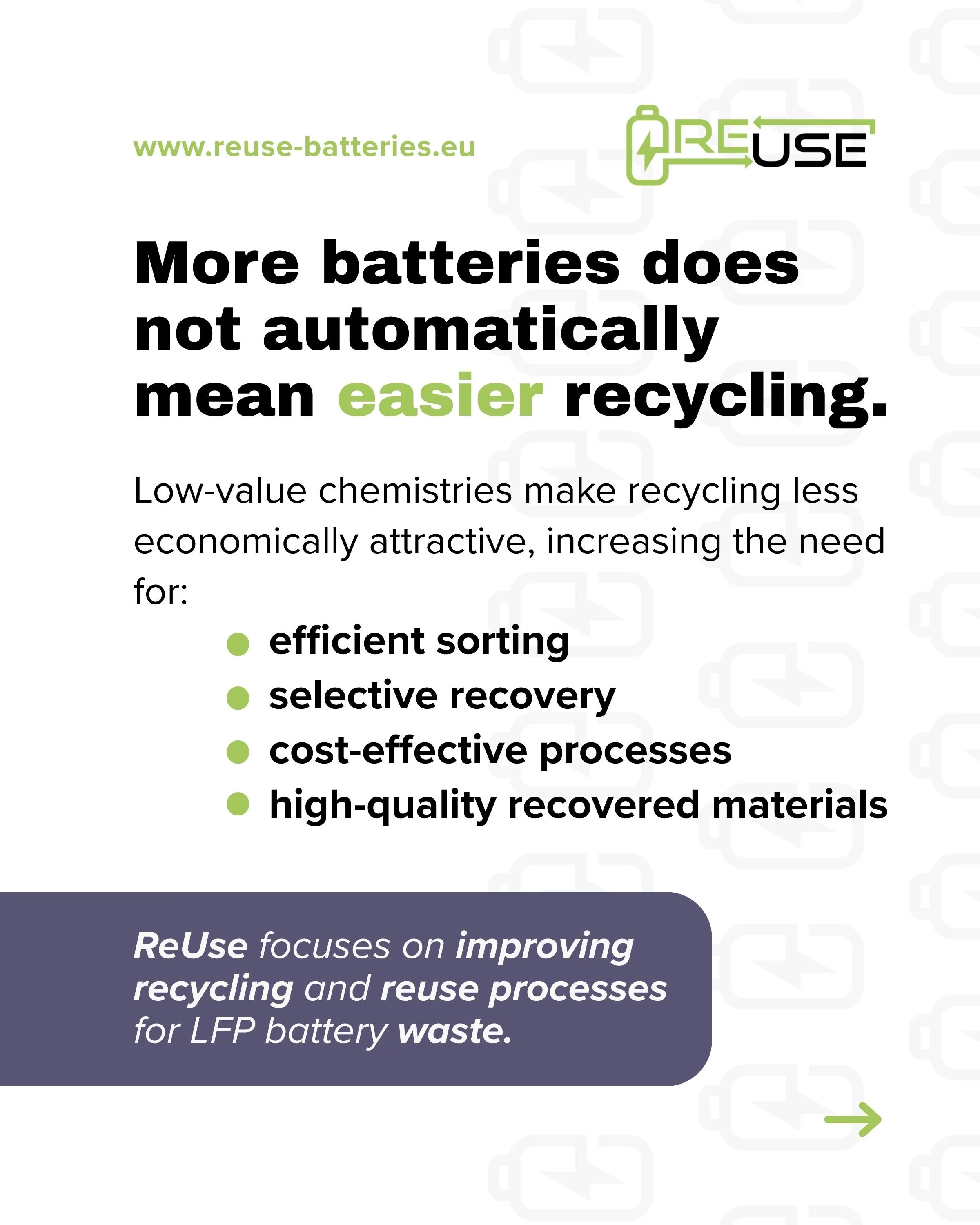
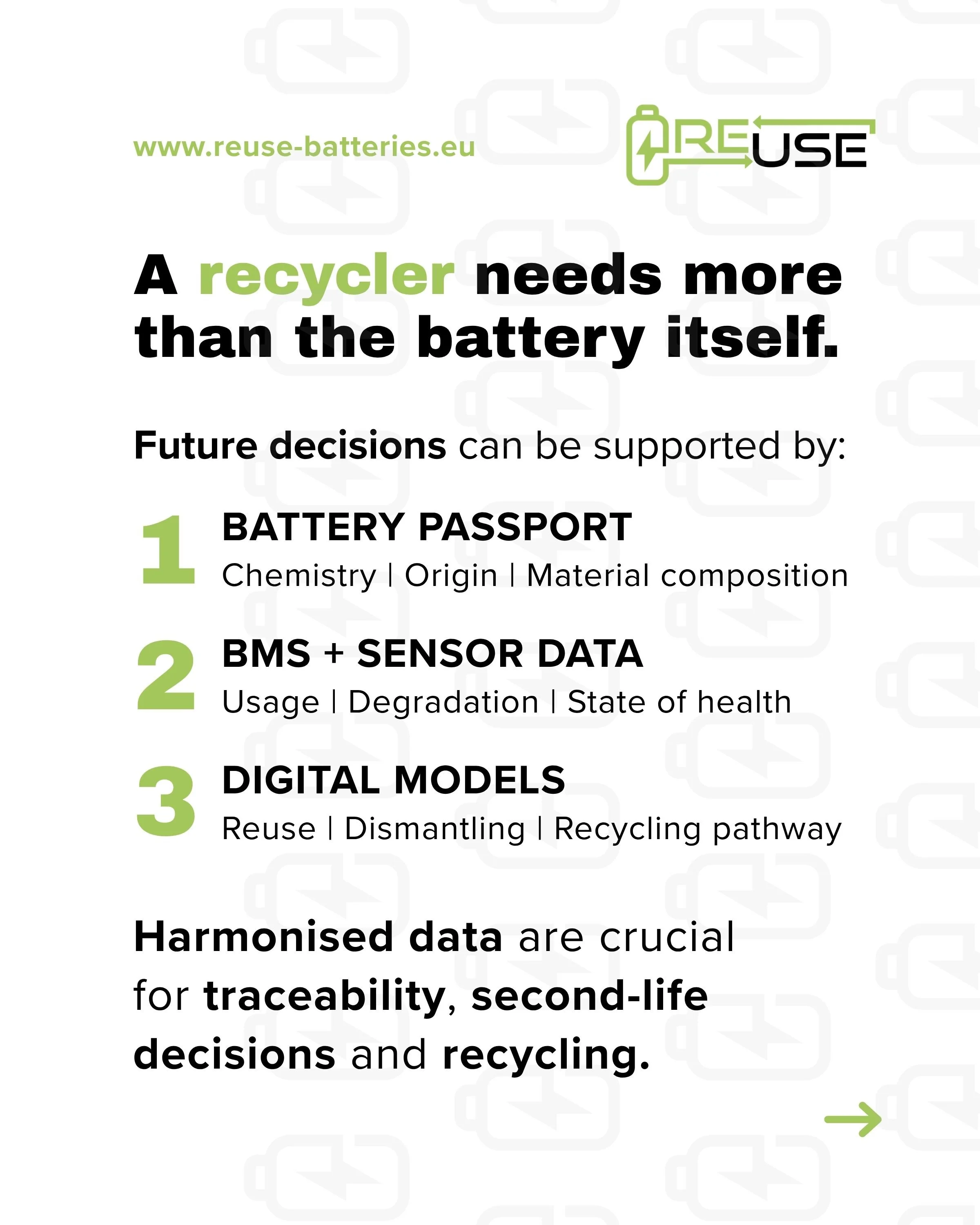
As battery volumes and chemistry diversity increase, recycling will have to become more automated, flexible and economically viable. The roadmap points towards improved identification and sorting, safer dismantling, better material separation and ultimately more direct recovery of active materials. It also highlights the importance of standardised data, battery passports and battery management information for supporting reuse, second-life and recycling decisions.
These challenges closely connect with the work already underway in ReUse. The project focuses on improving recycling and reuse processes for LFP battery waste, where relatively low material value creates particular economic challenges. ReUse addresses different steps of the recycling chain, from identification and sorting through deactivation and disassembly to separation, recovery and material regeneration.
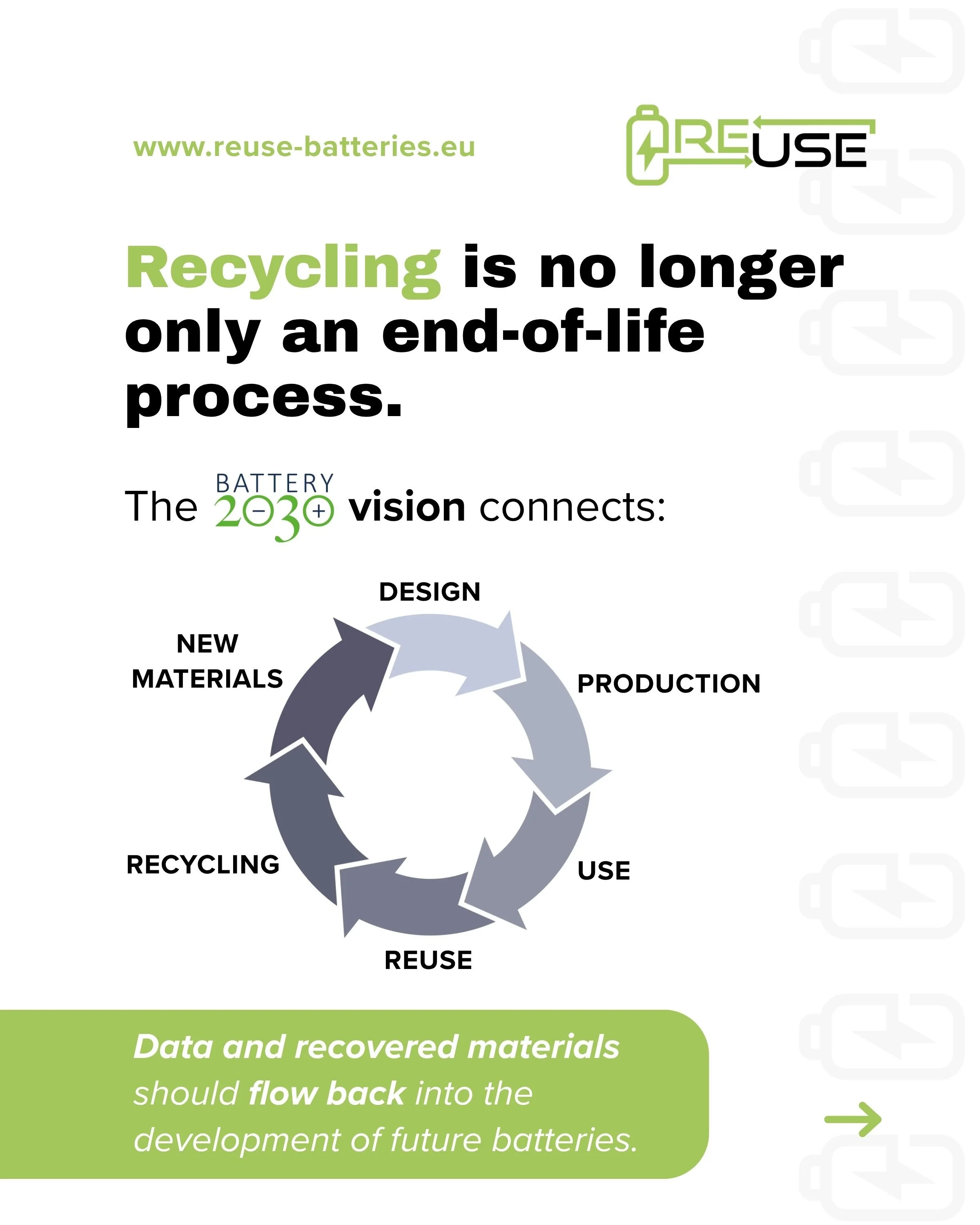
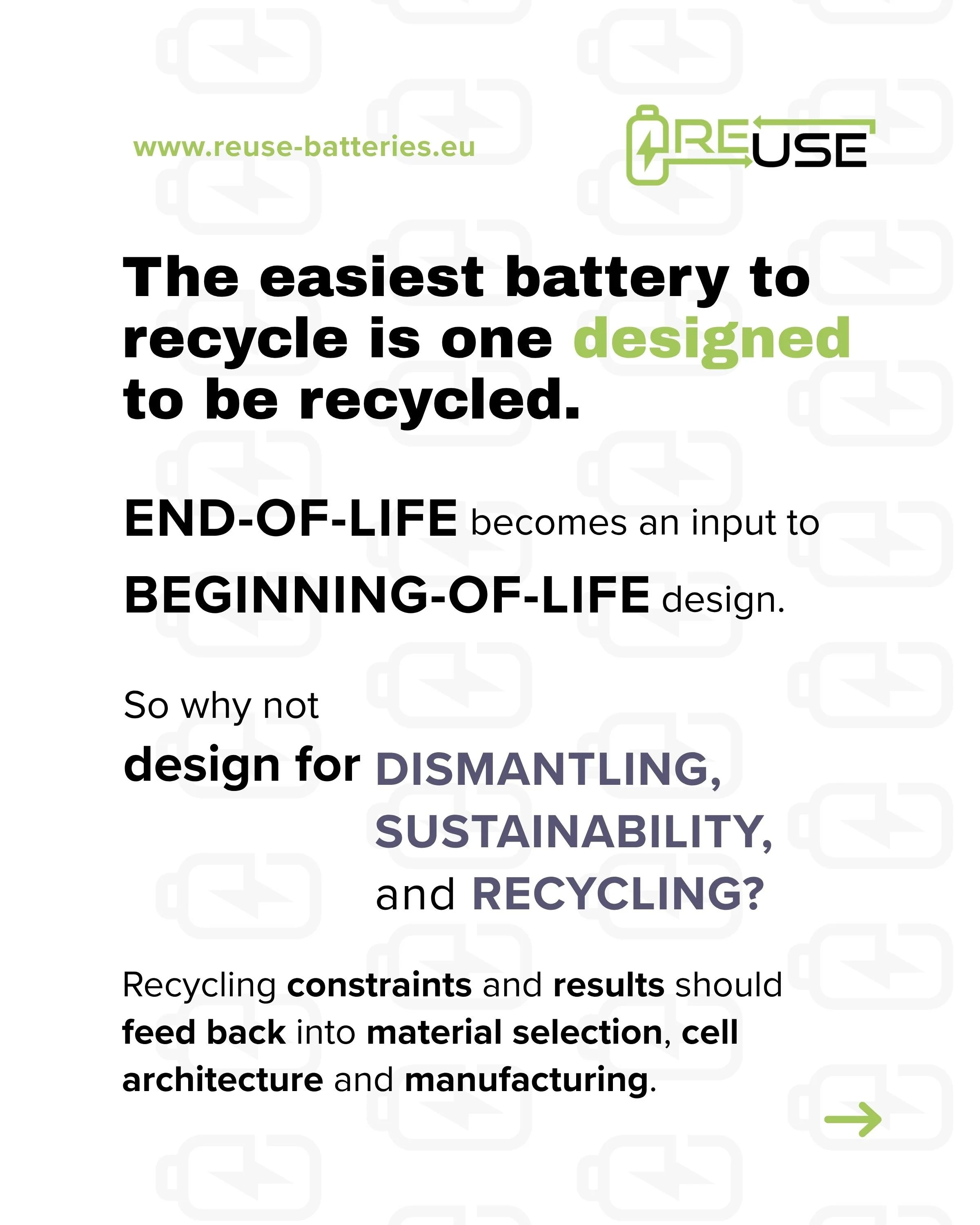
One of the roadmap's broader messages is particularly important: recycling should no longer be treated only as the final step of a battery's life. Instead, information and materials recovered at end of life should feed back into future battery development. Recycling constraints can inform material selection, cell architecture and manufacturing, turning end-of-life knowledge into an input for beginning-of-life design. This shift towards a genuinely closed battery loop is also at the heart of ReUse.
We are grateful to have been part of the Battery 2030+ community, to have participated in its activities and to have contributed the ReUse perspective to discussions informing the roadmap. The initiative may have reached the end of its journey, but the research priorities it helped establish remain highly relevant for Europe's battery sector.
And there is already a next chapter.
BATT-BRIDGE follows in the footsteps of Battery 2030+, continuing efforts to connect and strengthen the European battery research and innovation community. ReUse is also part of this new initiative – and we will be introducing BATT-BRIDGE and what it means for our project shortly. In the meantime, explore our carousel highlighting some of the Battery 2030+ Roadmap priorities through the lens of battery recycling and ReUse.