
Not All Battery Waste Is the Same: Understanding the Waste Streams
Talking about "battery waste" can make it sound like a single, uniform material. In reality, battery recycling begins with a much more complicated mix of cells, electrodes, production scraps, electrolyte-containing materials and processed fractions. Understanding exactly what kind of waste is entering a recycling process is therefore an essential first step towards recovering its materials effectively.
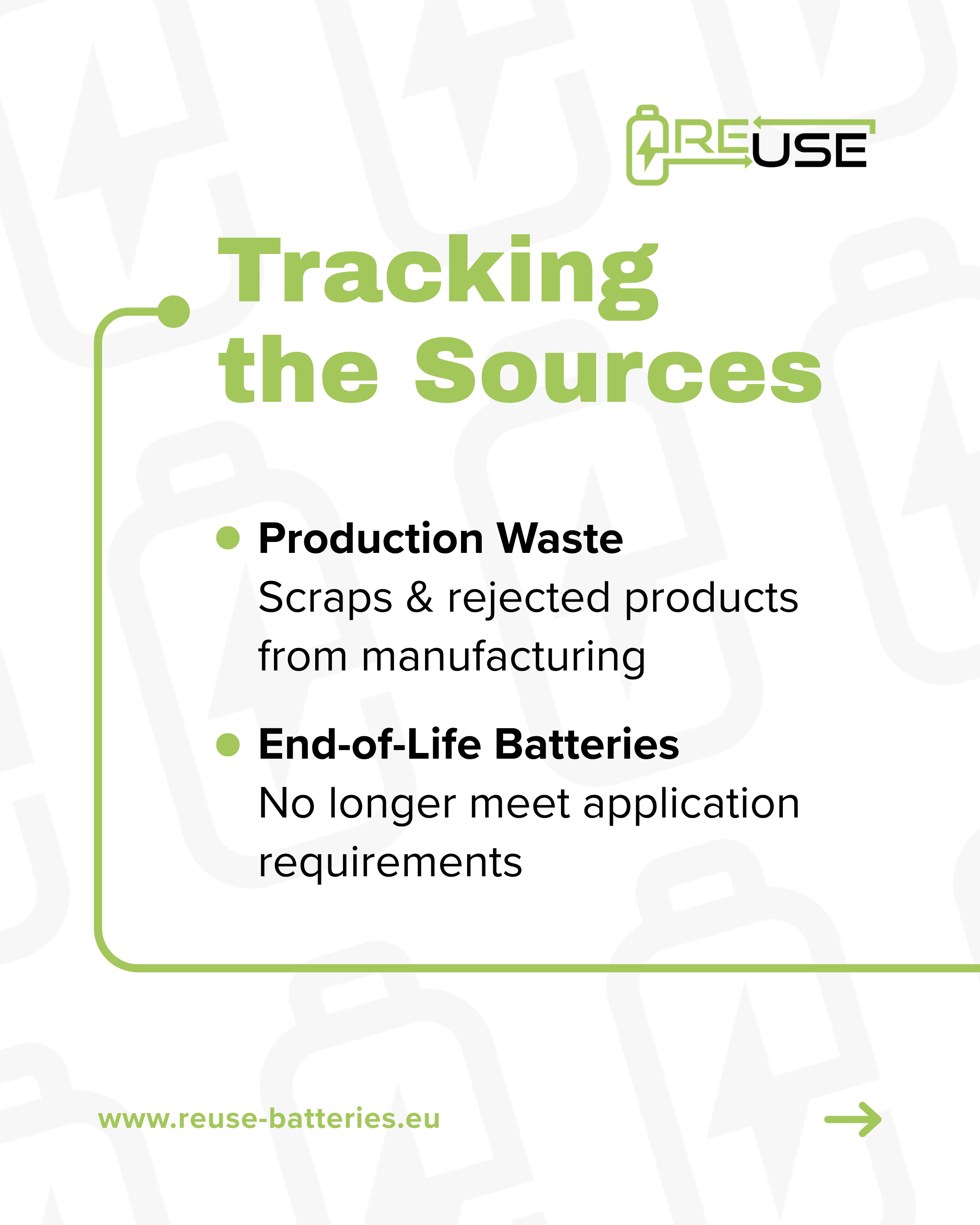
Two main origins of LFP battery waste
ReUse distinguishes two broad categories: battery production waste and end-of-life (EOL) batteries. Production waste is generated during battery manufacturing. It can include defective or rejected electrodes, electrode stacks, dry cells and other scraps produced at different stages of cell manufacturing and assembly.
End-of-life batteries, by contrast, are batteries that have fallen below the performance threshold required for their original application. The distinction matters because the composition, physical form, contamination and safety characteristics of these materials can be very different.
From cells to individual waste fractions
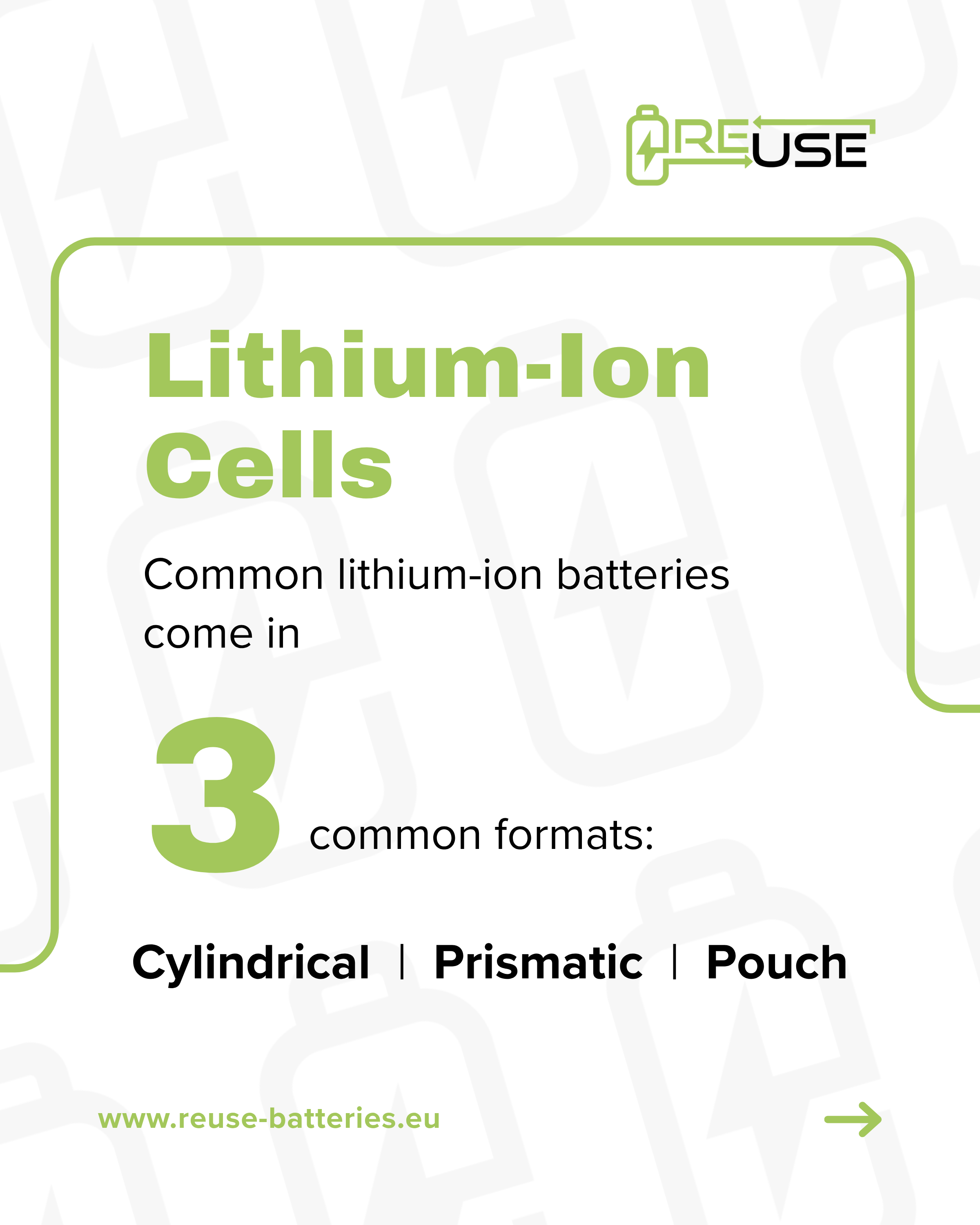
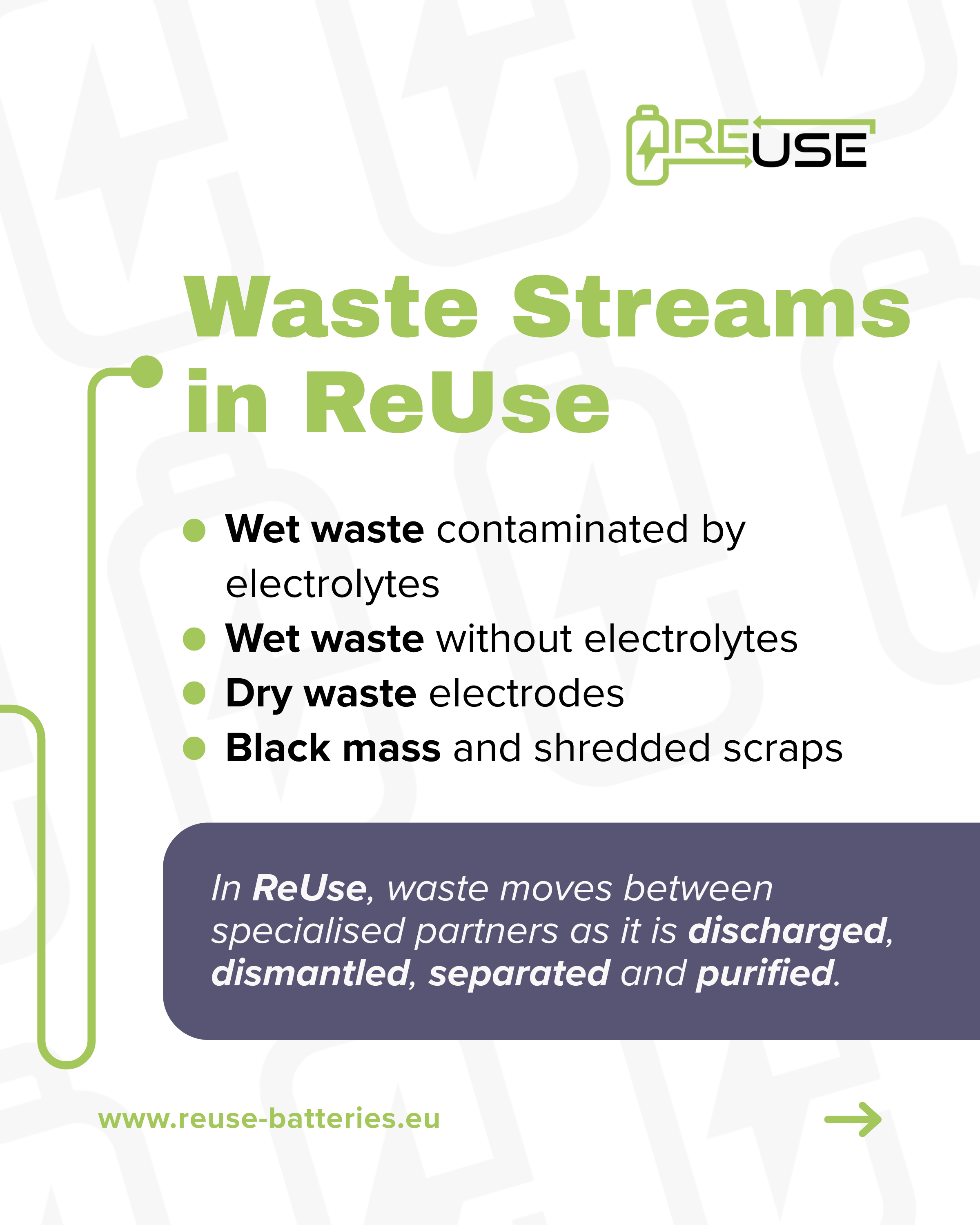
Lithium-ion cells themselves commonly appear in cylindrical, prismatic and pouch formats. But once battery manufacturing and recycling processes are considered, the number of possible waste fractions becomes much larger. D1.1 groups the streams relevant to ReUse into four broad quadrants:
wet waste without electrolyte contamination, such as waste slurries;
wet battery waste containing electrolyte;
dry electrode waste;
black mass and shredded scraps.
Even within these groups, composition varies considerably. For example, a waste cathode sheet consists of an aluminium current collector coated with cathode material. Waste electrode stacks combine cathode and anode sheets with separators. In the waste electrode stacks examined within ReUse, LFP represents approximately 50–60 wt.%, graphite 20–30 wt.%, while copper and aluminium each represent approximately 4–9 wt.%. Those differences influence not only how much useful material can potentially be recovered but also the material's reactivity, chemical stability and safety characteristics.
How waste moves through ReUse
The ReUse waste streams originate from several parts of the battery value chainProduction waste is supplied by battery manufacturers ElevenEs and Morrow Batteries, while EOL material also enters the project through KYBURZ. At Sortbat, EOL LFP batteries are manually identified from mixed end-of-life lithium-ion battery waste while the project develops automated sorting based on multisensory recognition.
From there, the material does not remain in one form. As it moves through the project, it is progressively discharged, disassembled, separated and purified. The recycling chain covers electrolyte recovery, separation of cathode and anode materials, recovery of aluminium and copper, and separation of cathodic and anodic active materials. ReUse investigates several recycling technologies, including direct recycling, electrochemical recycling, pyrometallurgy and hydrometallurgy.
The ultimate goal is to regenerate useful materials so that they can return to the battery value chain rather than being treated simply as waste.