
Safe LFP Battery Recycling Starts Before the Recycling Process
LFP batteries are widely recognised for their strong safety characteristics. But "safer chemistry" does not mean that damaged, defective or end-of-life batteries can be handled like ordinary waste. Before valuable materials can be recovered, batteries and production waste need to be stored, handled and transported safely. That makes safety an integral part of the recycling chain rather than a separate consideration.
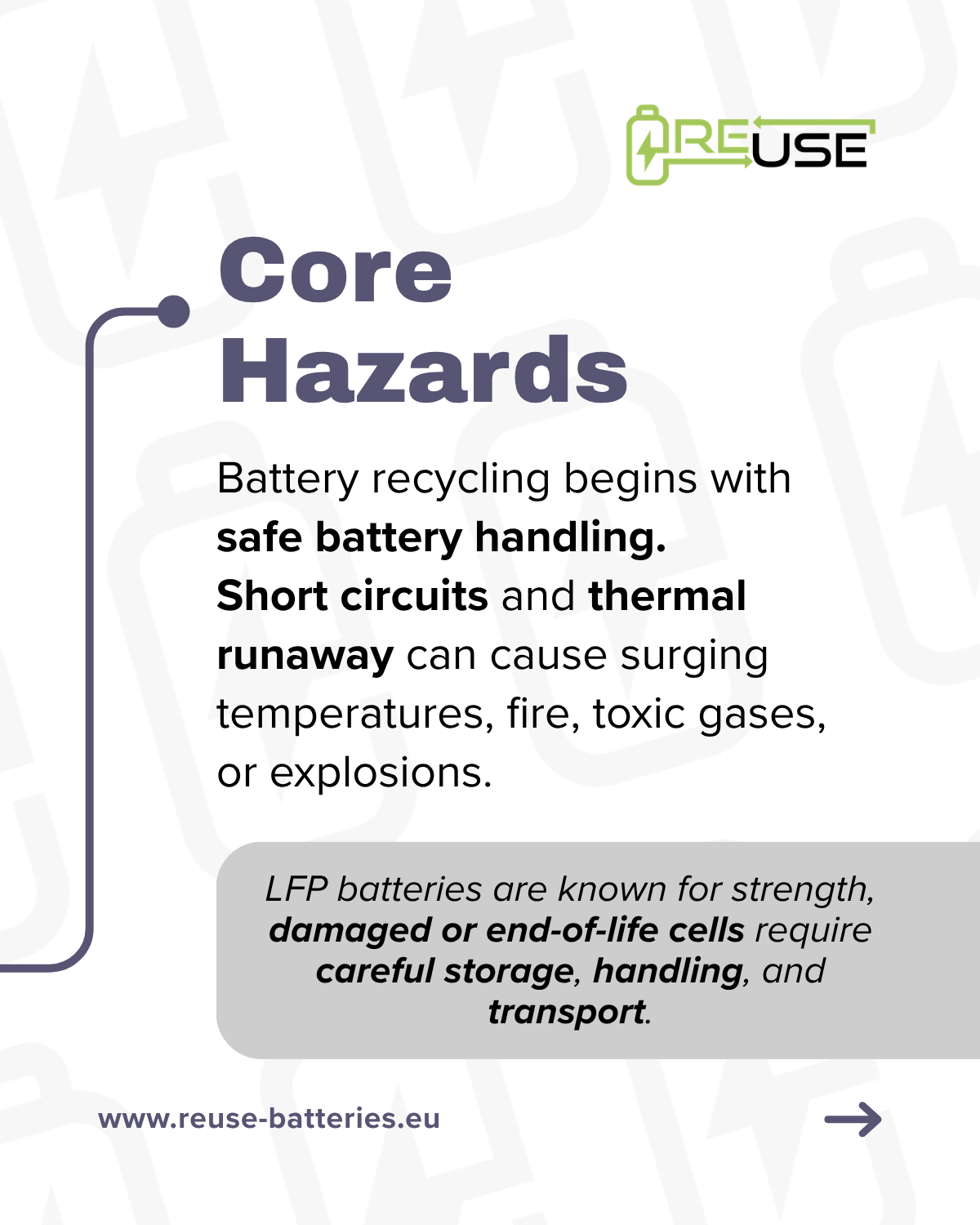
Lithium-ion batteries can retain considerable electrical energy after being removed from service. Damage, inappropriate handling or an internal or external short circuit can trigger rapid heat generation and, in severe cases, thermal runaway.
Potential consequences include high temperatures, fire, release of hazardous gases and explosions. The condition of the battery therefore needs to be considered before it enters storage, transport or recycling operations. The ReUse safety carousel highlights precisely this point: recycling begins with safe handling. LFP chemistry has a comparatively stable cathode structure, but other battery components, including electrolyte and electrically conductive materials, still create hazards that must be managed.
Storage starts with knowing the battery's condition
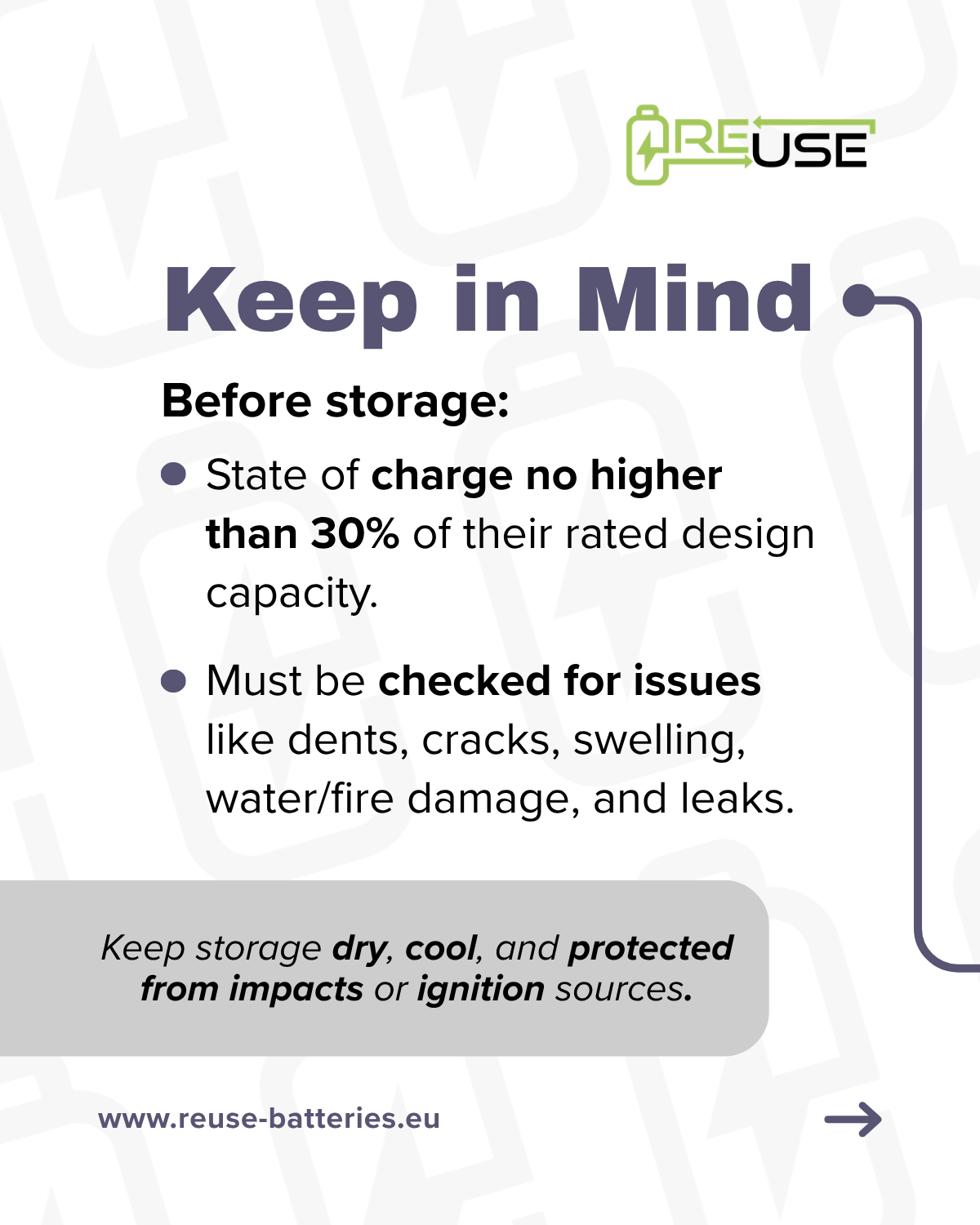
Before storage, batteries should be inspected for signs of damage such as dents, cracks, swelling, leakage and water or fire damage. The safety guidance examined within D1.1 also includes limits on the state of charge for batteries entering storage. The carousel summarising the report highlights a state of charge no higher than 30% of rated design capacity and recommends dry, cool storage protected from impacts and ignition sources.
The deliverable goes considerably further, examining handling and storage requirements for the individual chemicals and materials that may occur in LFP batteries and production waste. Its safety assessment covers production waste as well as complete lithium-ion batteries and related materials.
Monitoring for early warning signs
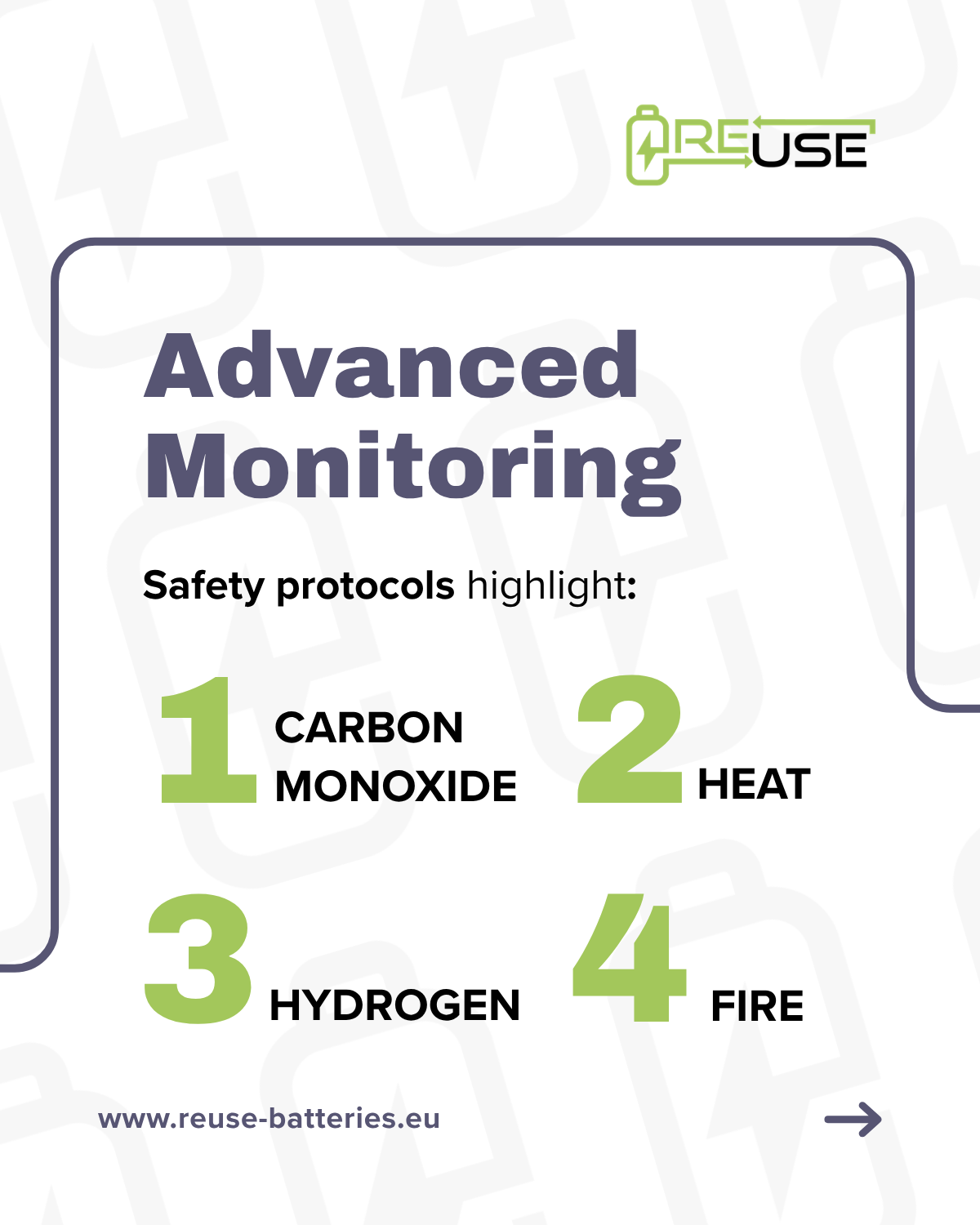
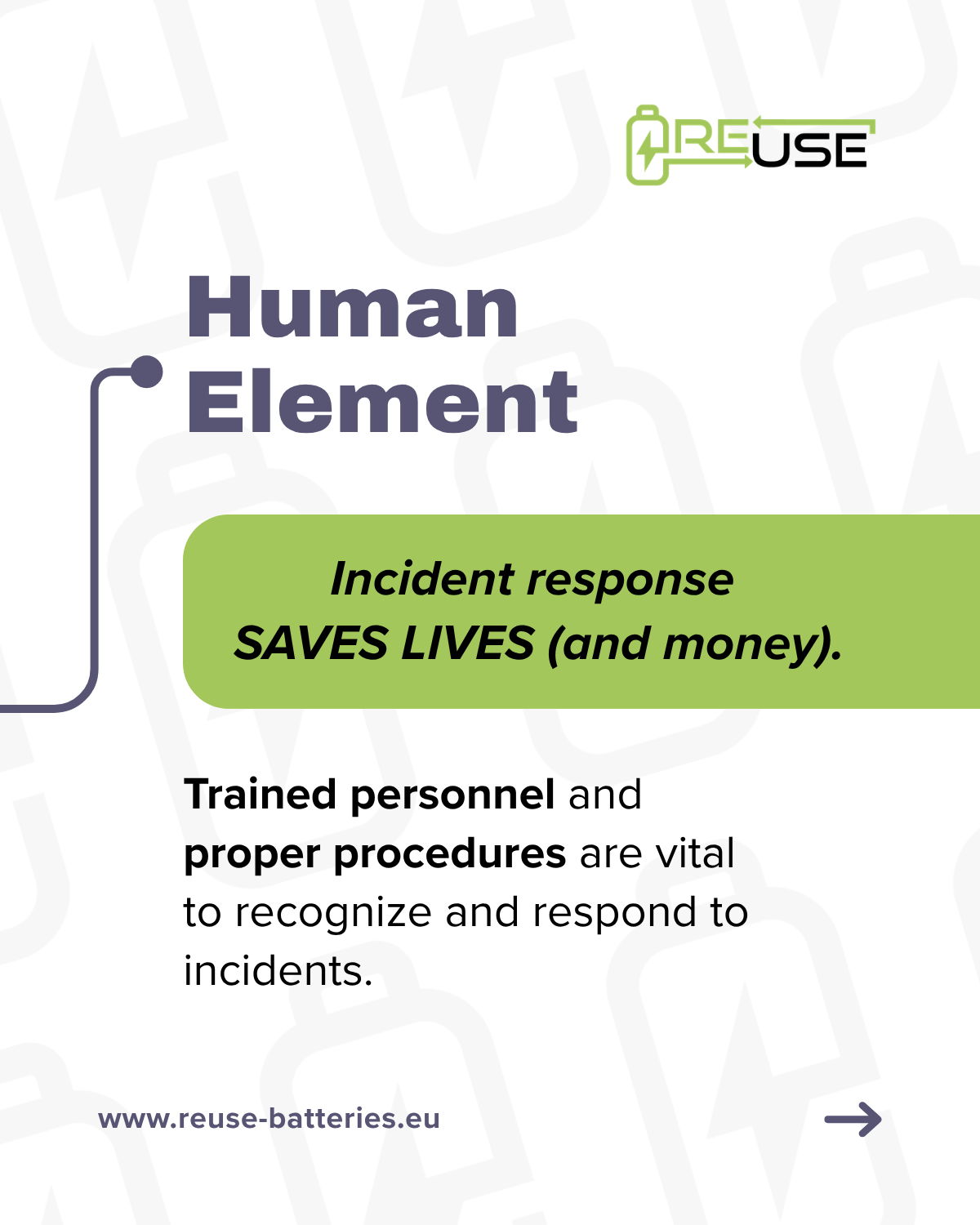
Safe storage is not only about choosing an appropriate location. Monitoring can help identify signs that an incident is developing. Relevant indicators include heat, carbon monoxide, hydrogen and fire. Appropriate detection and response systems can therefore form an important layer of protection where battery waste is stored or processed. Technology alone, however, is insufficient. Trained personnel and clear incident-response procedures remain essential for recognising abnormal conditions and responding appropriately.
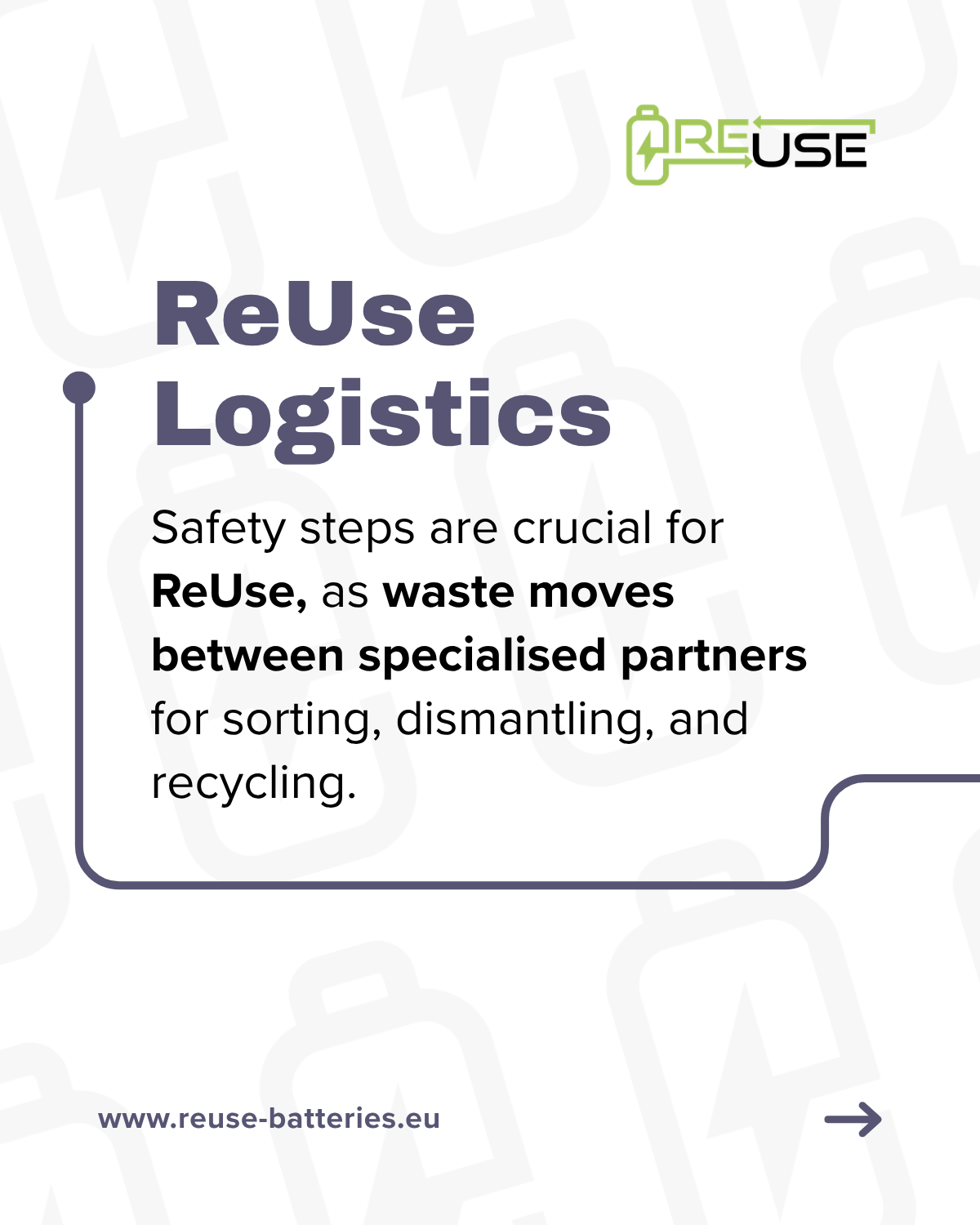
This becomes particularly important in a collaborative recycling project such as ReUse. Battery waste moves between specialised partners as it passes through sorting, discharging, dismantling, separation, purification and recycling operations. The properties and risks of the material can change along that route as a complete battery becomes a dismantled cell, an electrode fraction, black mass or another intermediate material.
For ReUse, safe recycling therefore begins well before material reaches the recycling reactor. Correct identification, discharge, storage, packaging, monitoring, handling and transport are all part of building a viable circular battery process.