
The Rise of LFP Batteries: Today’s Market, Tomorrow’s Recycling Challenge
Lithium iron phosphate (LFP) batteries are becoming an increasingly important part of the global battery market. Their growing use in electric vehicles and energy storage is good news for electrification, but it also raises an important question: what happens to these batteries when they reach the end of their useful life?
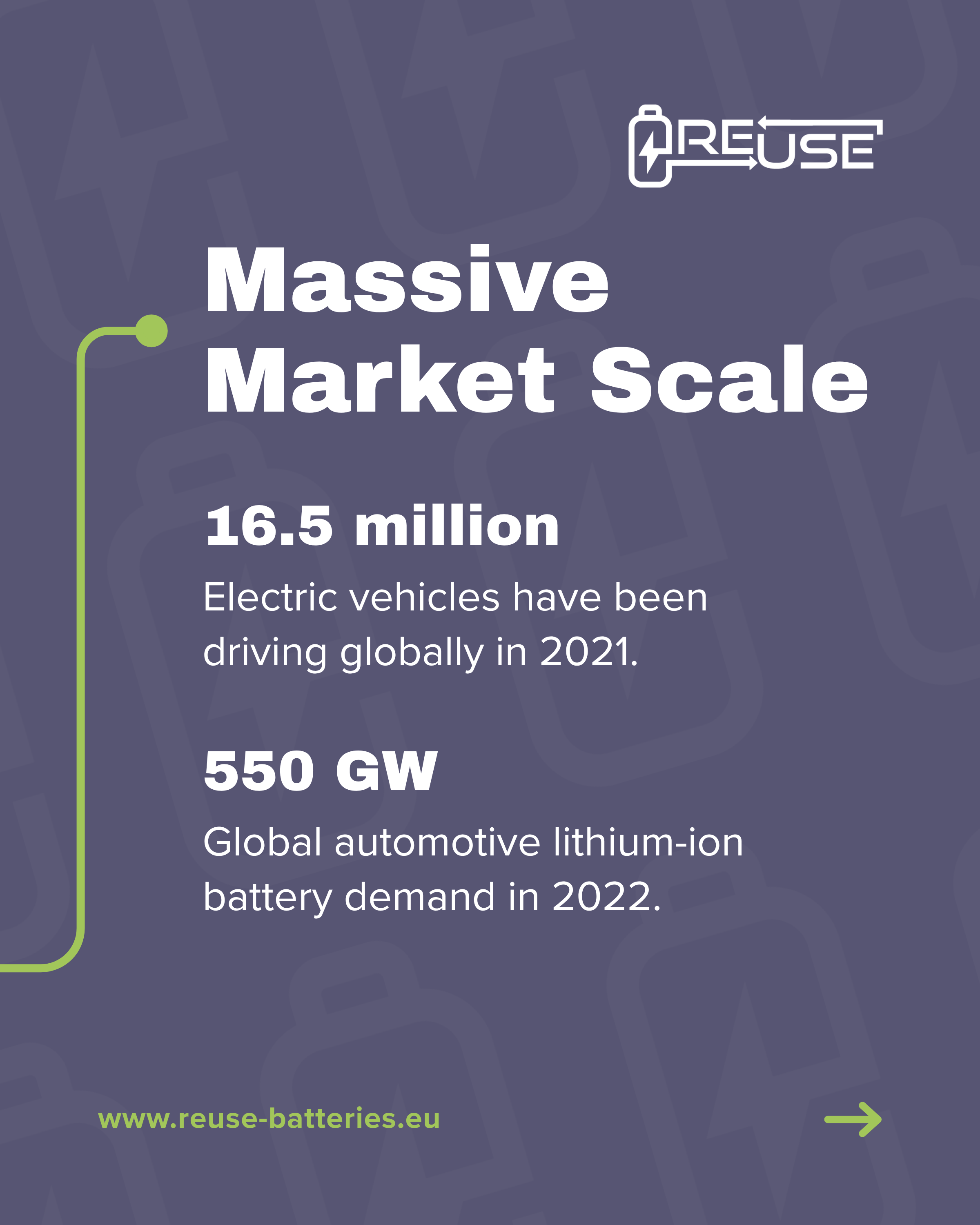
The scale of the battery market has already changed dramatically. According to the market data reviewed in ReUse Deliverable D1.1, approximately 16.5 million electric vehicles were on the road globally in 2021, while global automotive lithium-ion battery demand reached approximately 550 GWh in 2022.
Why LFP is gaining ground
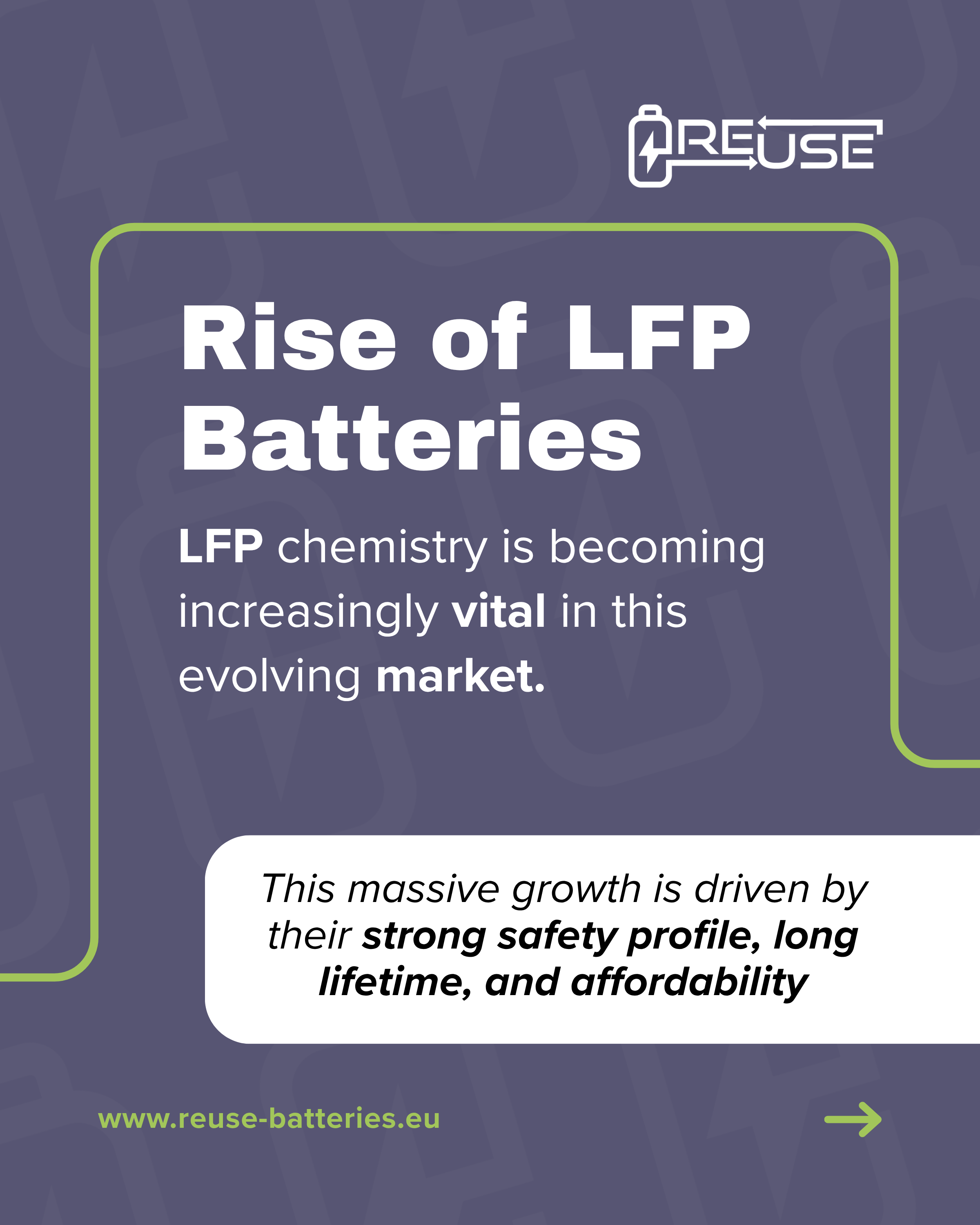
Several lithium-ion battery chemistries are used today, but LFP has characteristics that make it particularly attractive for many applications. LFP batteries offer a strong safety profile, long cycle life and comparatively low material costs. Their safety characteristics are linked to the stable crystal structure of the LFP cathode material and strong phosphorus-oxygen bonds. This stability makes the material more resistant to decomposition and the formation of highly oxidative substances under high-temperature or overcharge conditions.
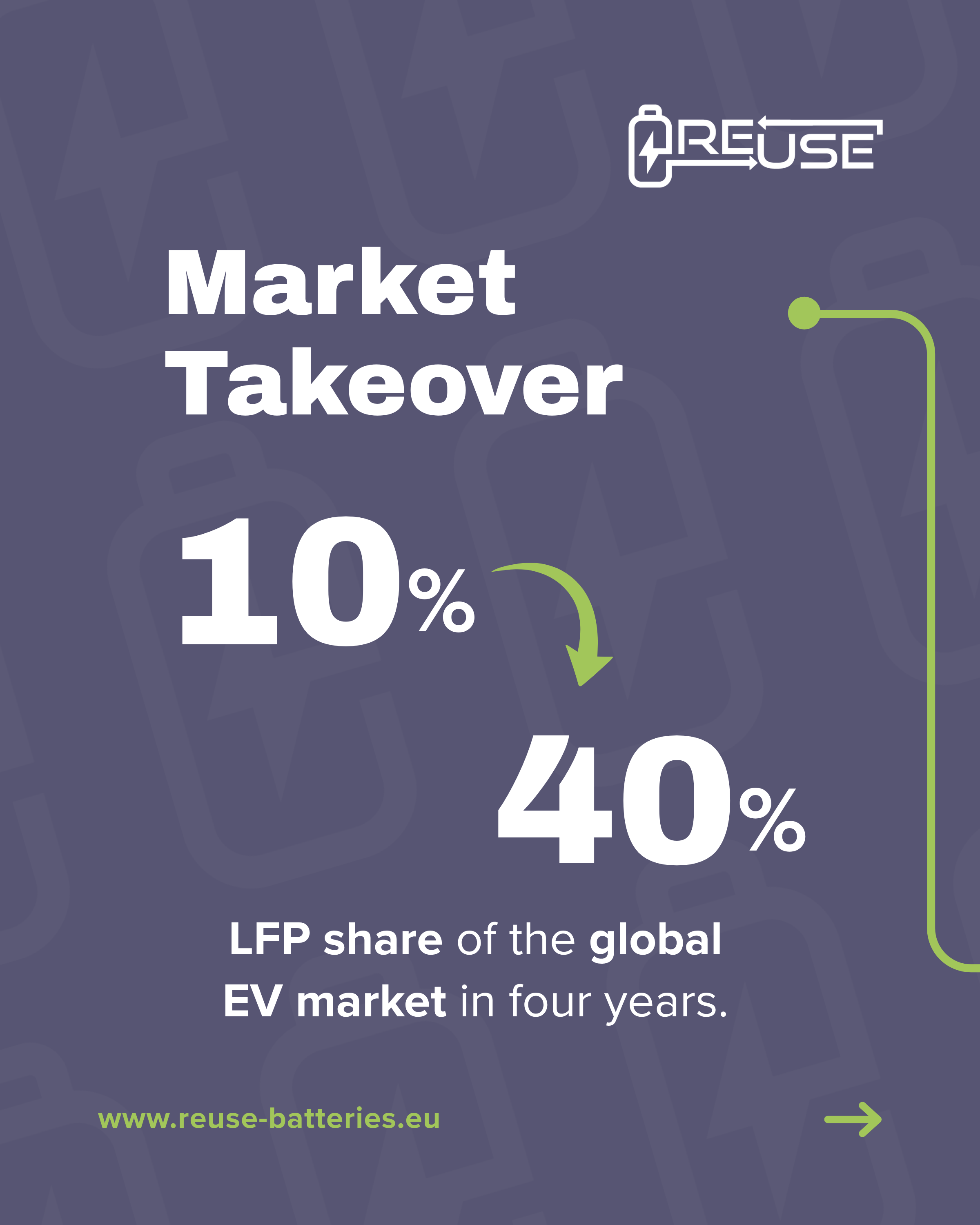
At the same time, LFP does not rely on nickel and cobalt in its cathode chemistry, contributing to lower raw-material costs compared with chemistries such as NMC and NCA. These advantages have helped LFP gain a much larger position in the EV market. The data analysed in D1.1 show its global EV market share increasing from approximately 10% to 40% within four years.
More batteries eventually mean more battery waste
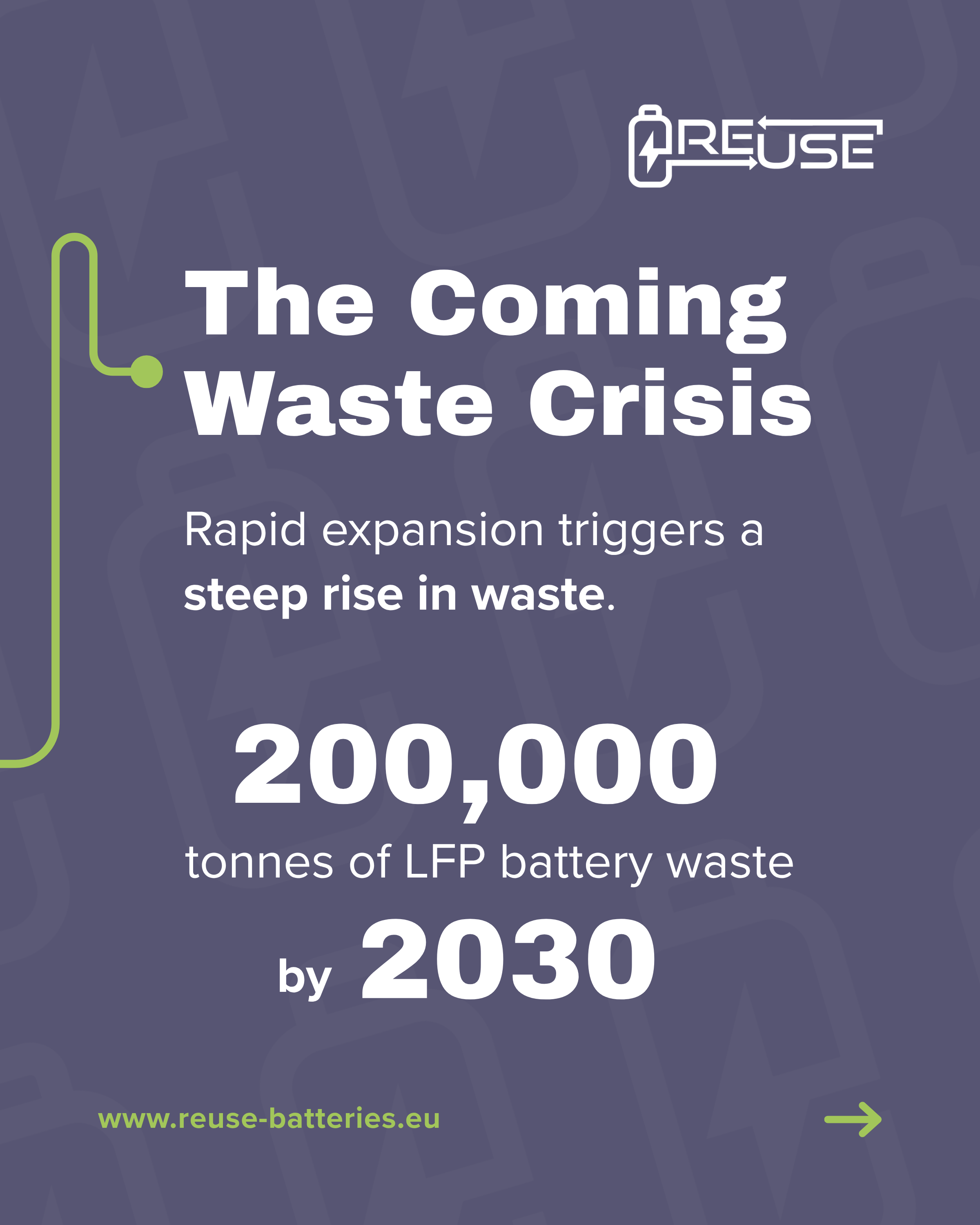
Rapid market growth has another consequence. Batteries entering service today will eventually become part of tomorrow's waste streams. The ReUse analysis points towards approximately 200,000 tonnes of LFP battery waste by 2030. This emerging stream will include both batteries that have reached the end of their useful life and waste generated during battery manufacturing.
This is particularly relevant for LFP because its economics differ from those of battery chemistries containing higher-value metals. Efficient recovery therefore requires recycling approaches designed specifically around the characteristics of LFP.
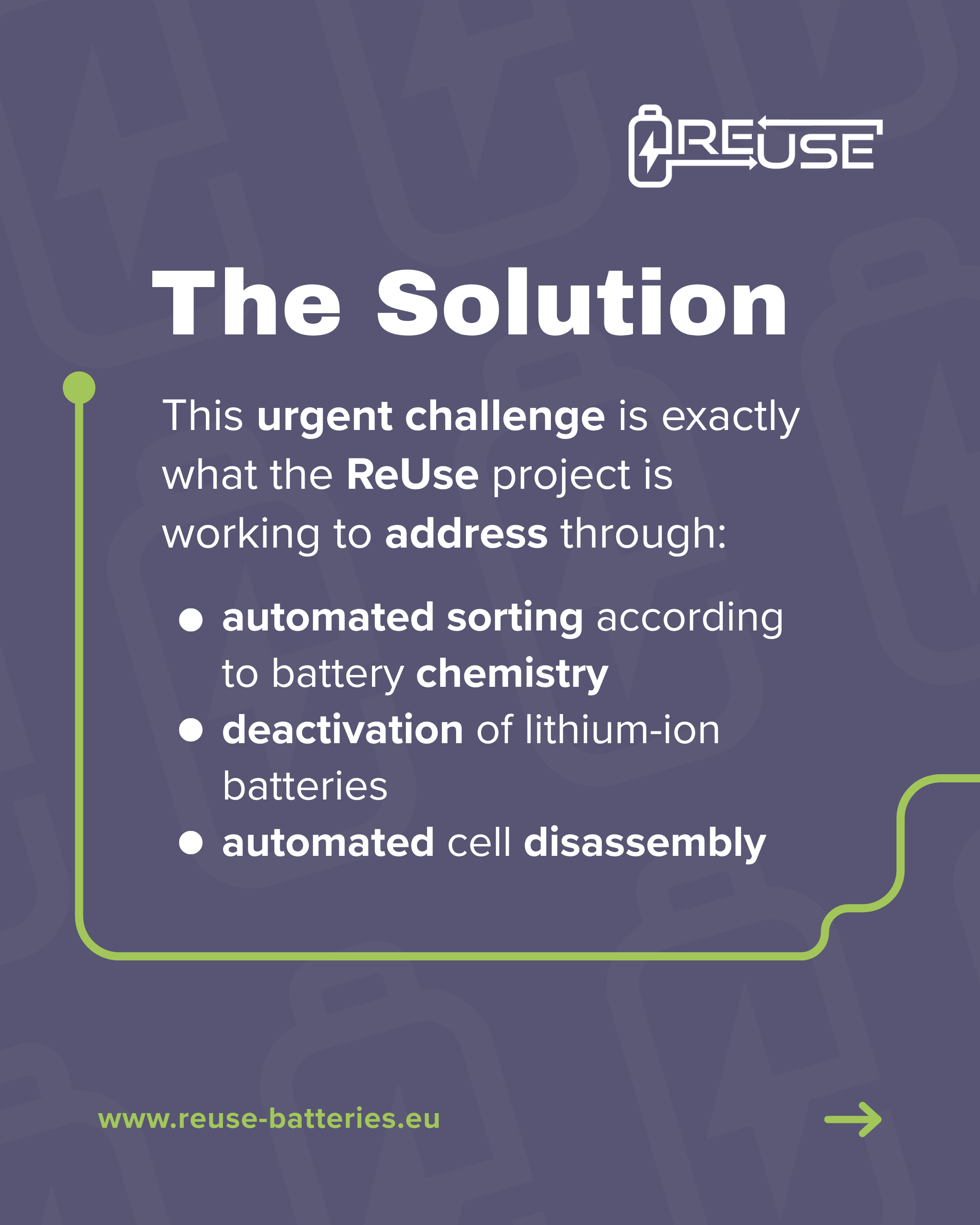
ReUse addresses this challenge by developing a circular process for LFP battery waste. The project covers several stages of the recycling chain, including automated sorting according to battery chemistry, battery deactivation and automated cell disassembly, followed by processes for separating, recovering, purifying and regenerating battery materials.
The aim is not simply to manage a growing waste stream. ReUse is working towards returning recovered materials to battery production, helping transform end-of-life batteries and production scrap into resources for new lithium-ion batteries.