
What Low-Value Really Means: The Economics of LFP Battery Recycling
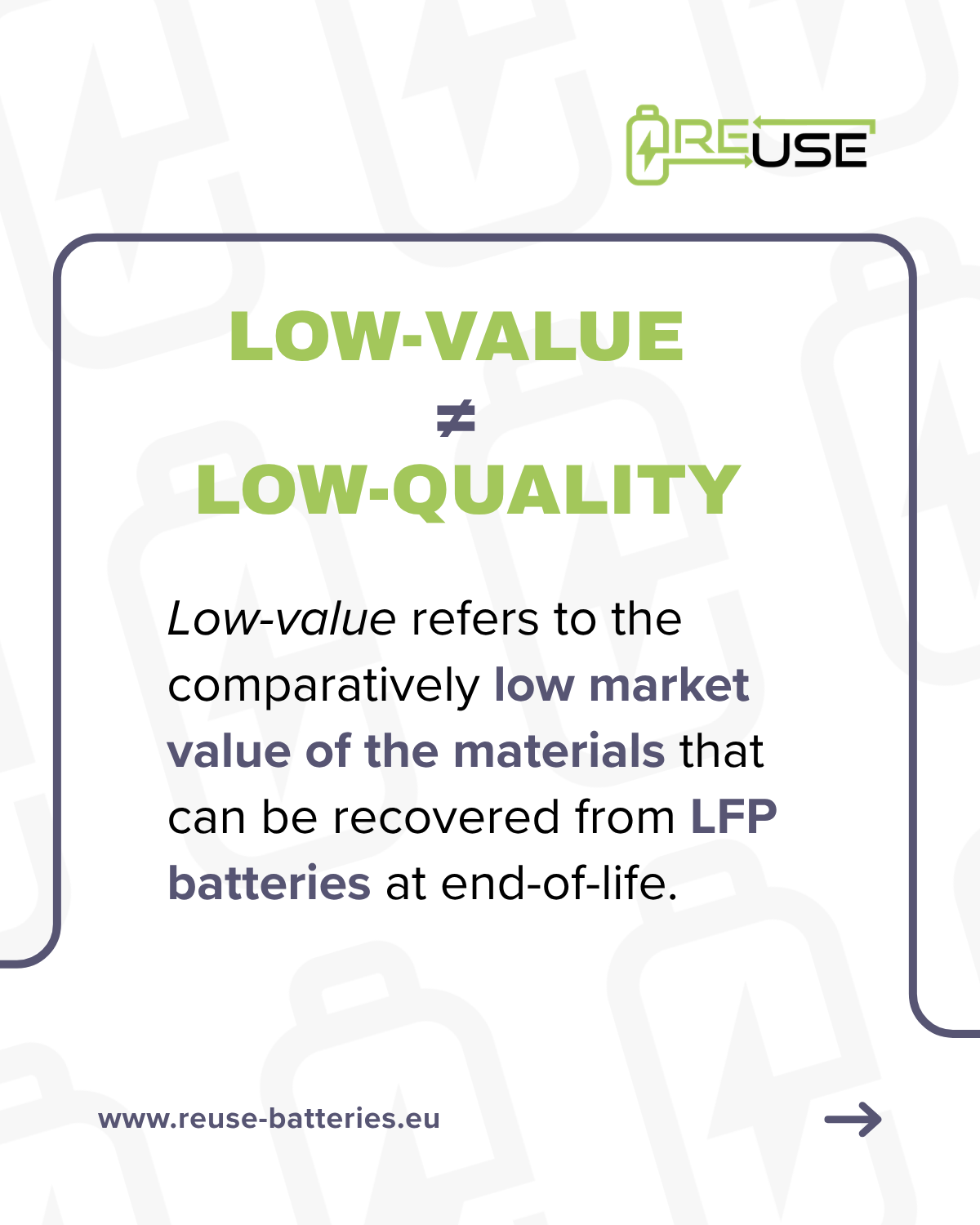
Lithium iron phosphate (LFP) batteries are often described as low-value in recycling. This does not refer to their performance, but to the comparatively low market value of recoverable materials at end-of-life.
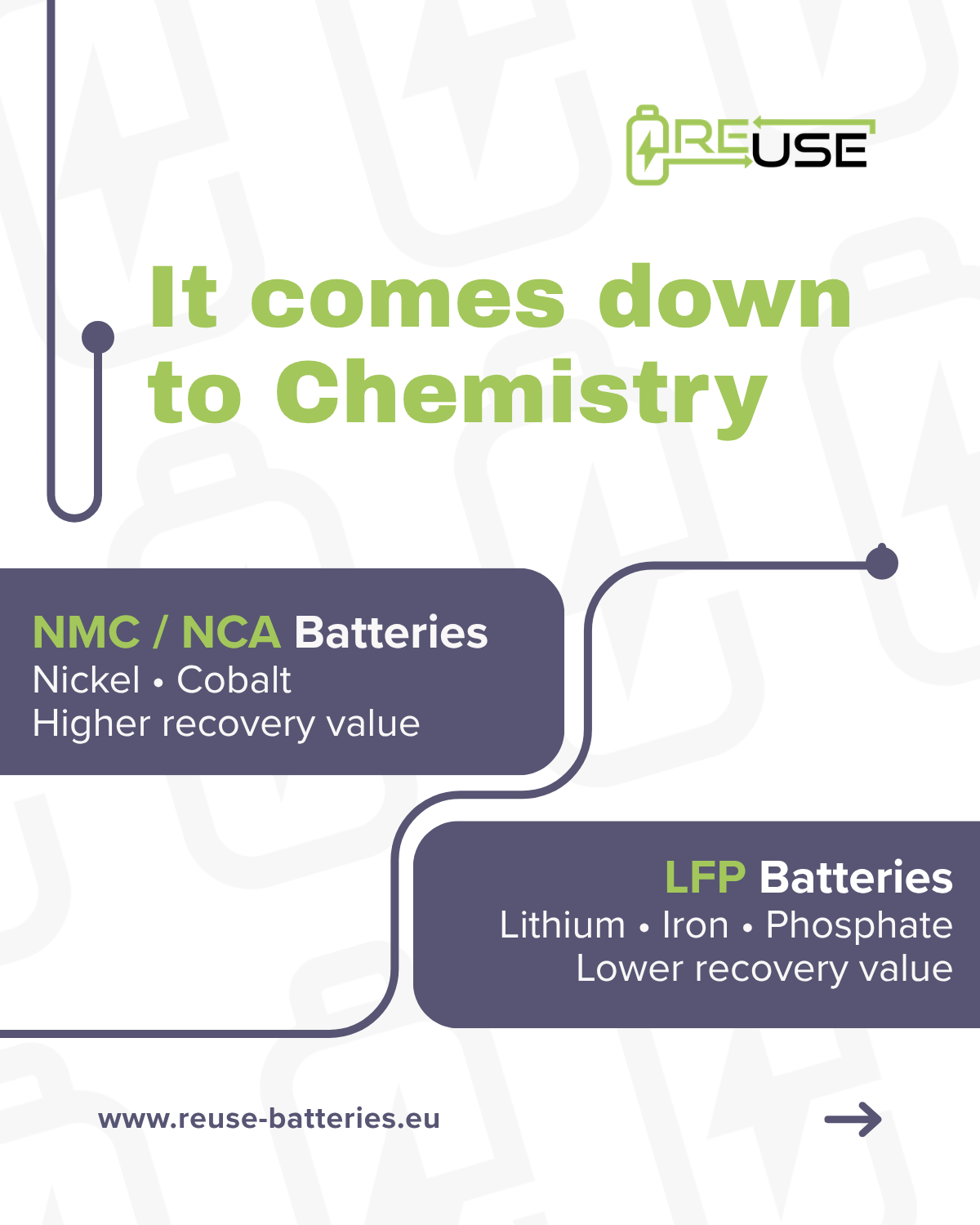
Unlike chemistries such as nickel manganese cobalt (NMC), LFP cathodes do not contain higher-value nickel or cobalt. Their lithium, iron and phosphate content therefore offers less potential revenue from material recovery, making recycling economics more challenging.
More Than Material Value
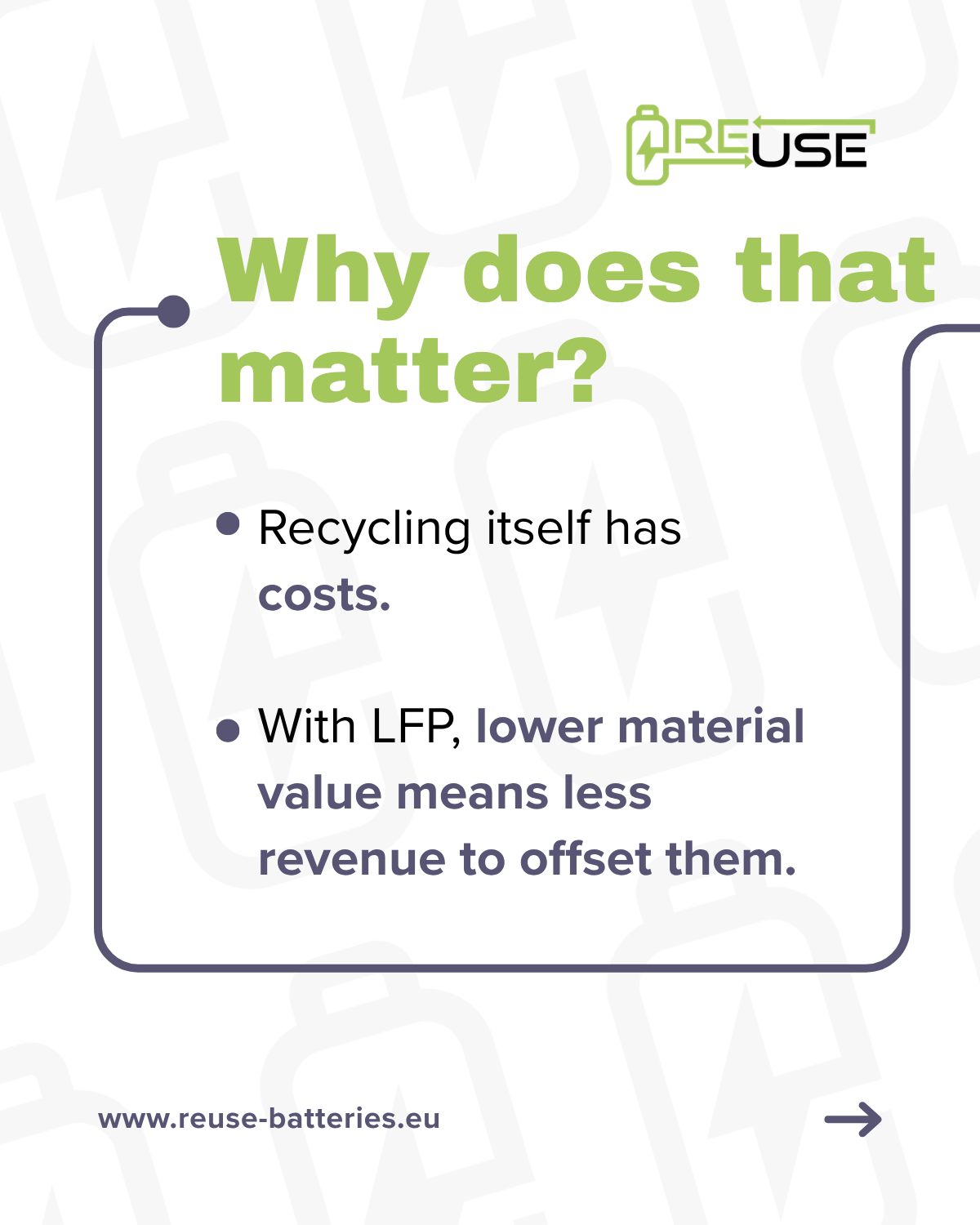
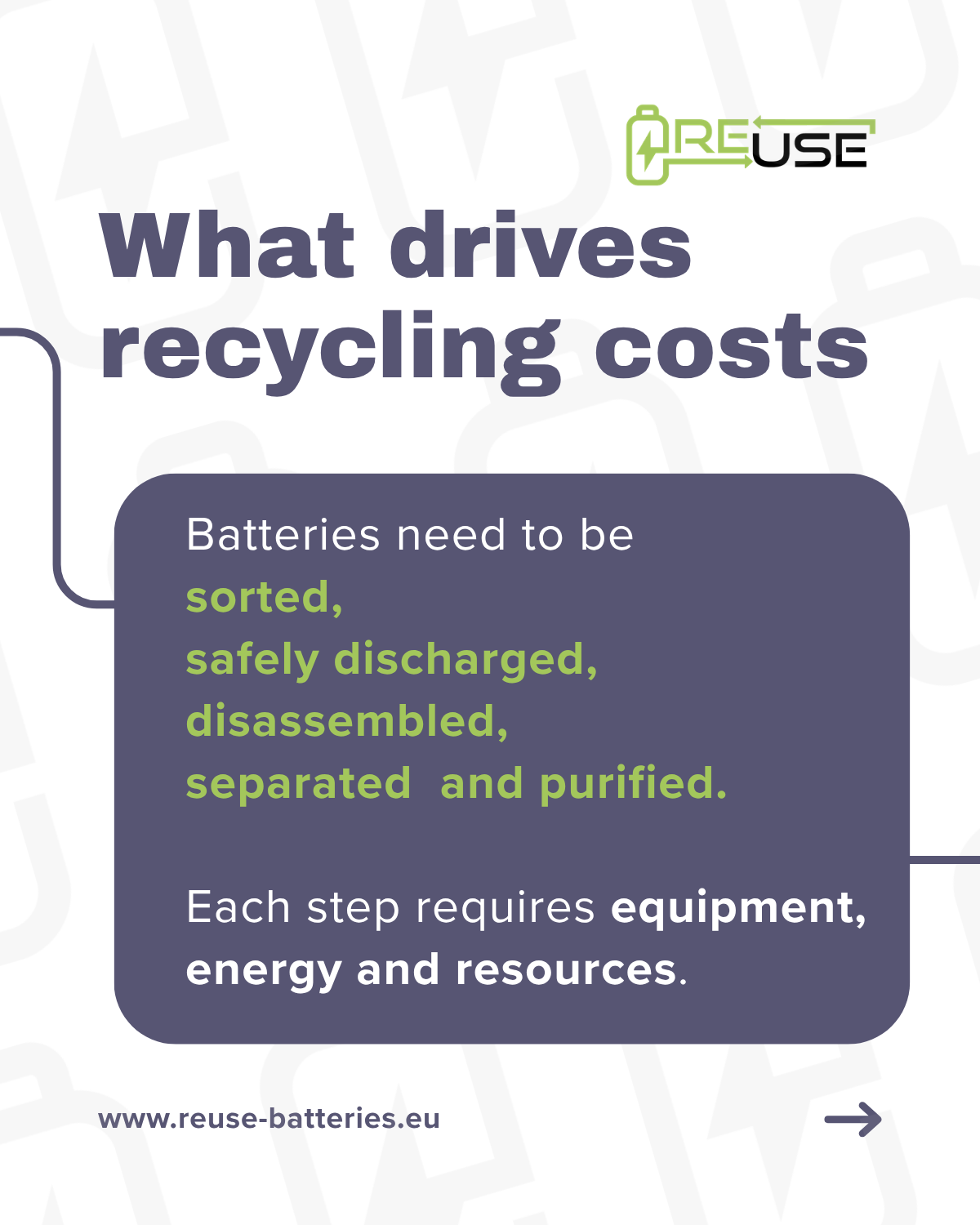
Recycling viability depends not only on what can be recovered, but also on what is required to recover it.
Battery waste must be identified, discharged and processed before individual components can be separated and purified. These operations require equipment, energy and, depending on the recycling route, chemicals and additional treatment.
The characteristics of the incoming waste also matter. Production scrap, sorted material streams and complete end-of-life batteries differ in composition and contamination, affecting the complexity and efficiency of recovery.
Improving the Recycling Equation
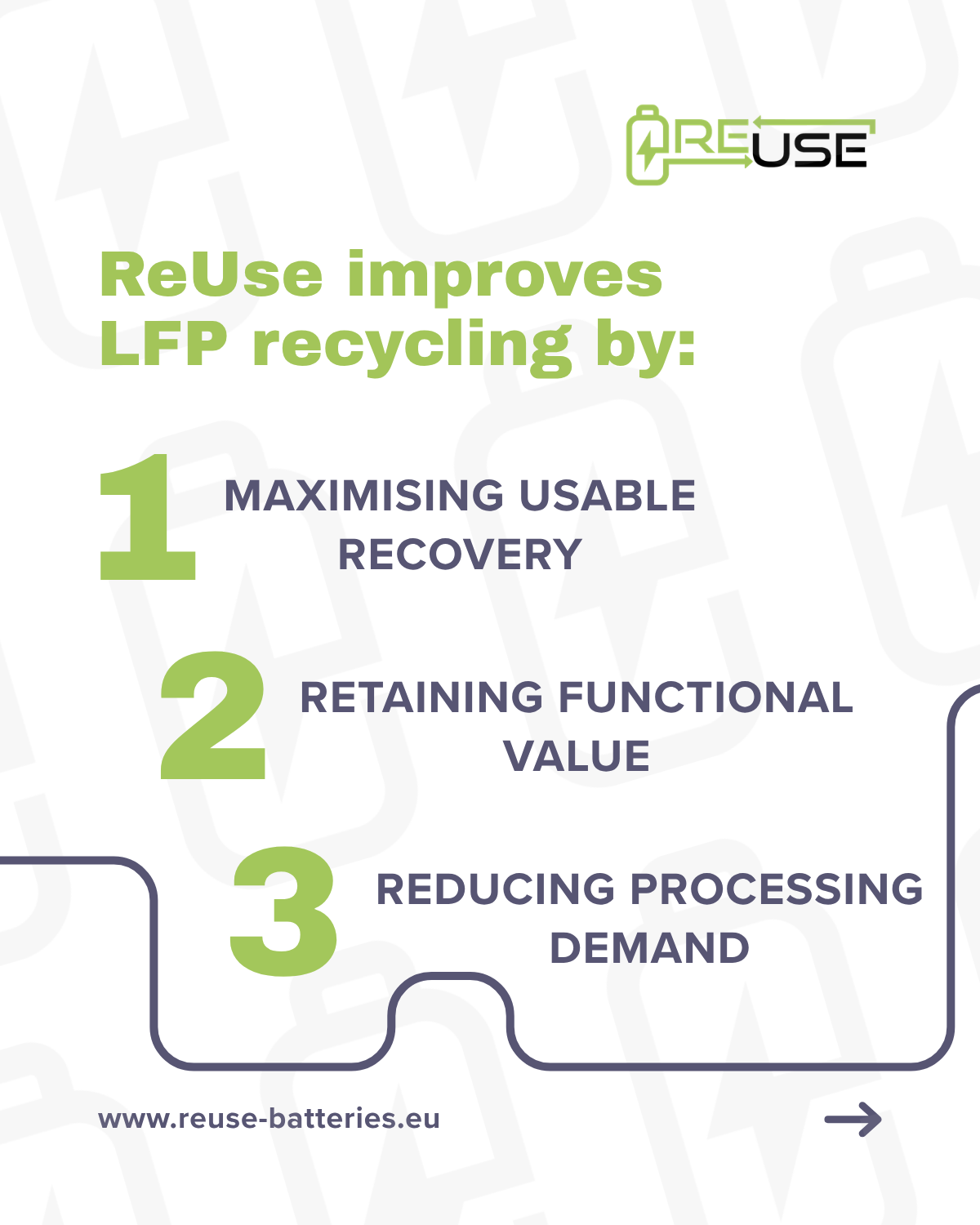
ReUse is developing an integrated recycling approach for low-value LFP waste with the aim of maximising usable material recovery while limiting unnecessary processing.
Improved sorting, separation and purification can produce cleaner material streams with higher recovery yields and purity. The project also investigates the regeneration of LFP cathode material and graphite for use in new batteries, preserving more of their functional value instead of recovering only basic raw materials.
For LFP recycling, economic viability therefore depends not simply on extracting materials, but on recovering them efficiently and retaining as much value as possible throughout the process.